


The Annual Conference of the European Association for the Education of Adults (EAEA) in Warsaw, dedicated to the theme of resilience and community-building, brought together experts, educators, and policymakers from across Europe to exchange knowledge and experiences in the field of adult education.
The conference focused on the role of communities in responding to crises and social challenges. It was emphasised that resilience should not be viewed solely as an individual capacity, but rather as a result of interconnected relationships, access to resources, and the ability of communities to act in a coordinated and supportive way.
This idea was strongly shaped by the keynote speech of Prof. Alicja Gałązka (University of Silesia), who highlighted that communities do not endure because of the strength of individuals, but because of their “living and connected roots” – the relationships that allow people to learn, adapt, and grow together. She also stressed that resilience cannot be separated from issues of inequality, access to resources, and social justice.
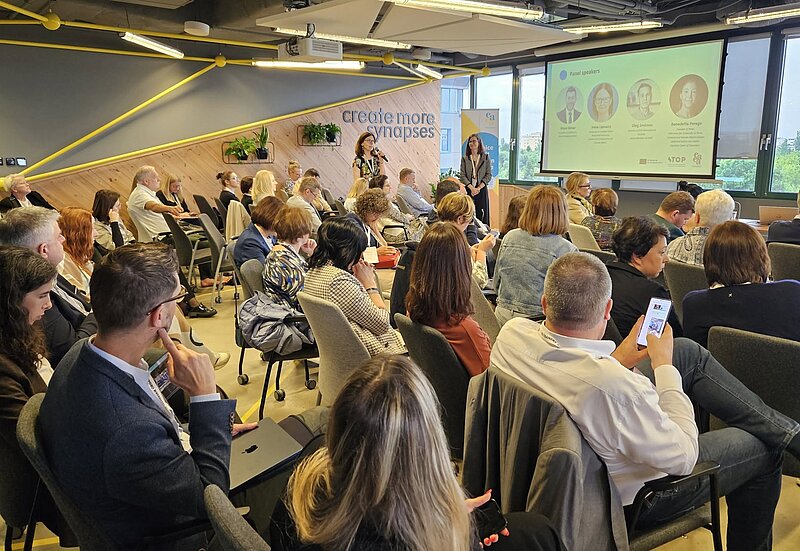
Similar messages resonated throughout the panel discussions, where the crucial role of adult education in strengthening community capacities was highlighted. Reflecting on crises and societal changes, participants warned that resilience should not become a politically “convenient” term used to shift responsibility onto individuals, but rather a starting point for deeper, systemic change (Oleg Smirnov). At the same time, it was underlined that education and access to knowledge empower citizens to make informed decisions and actively participate in democratic processes (Benedetta Perego).
Discussions repeatedly emphasised that communities become resilient when they have space to learn, strong networks of cooperation, and the capacity to act together (Musa Kirkar), while Professor Irena Lipowicz reminded that adult education is, in its essence, “education for resilience” — a continuous process that requires preparation and long-term investment, rather than reaction only in times of crisis.
An important highlight of the conference was the Grundtvig Award ceremony, which recognises innovative and impactful practices in adult education across Europe. The award once again underscored the vital role of adult learning initiatives in strengthening communities, fostering inclusion, and building resilience in diverse social contexts. We take this opportunity to congratulate this year’s award winners on their inspiring work and valuable contribution to the field of adult education.
The conference concluded that resilience is not a static condition, but a dynamic process built through knowledge, cooperation, and mutual trust, always shaped by its specific social context.
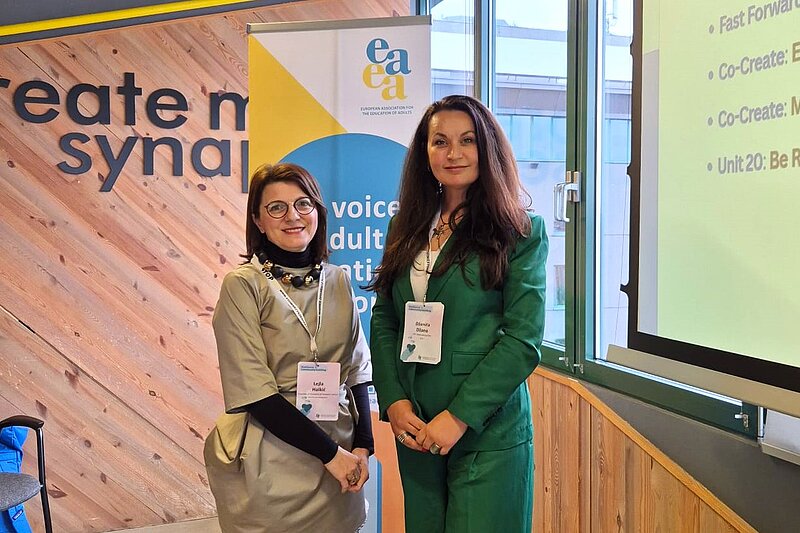
The delegation of Bosnia and Herzegovina at this important event included:
- Dženita Džano, Director of DVV International – Country Office Bosnia and Herzegovina,
- Lejla Halkić, Director of the Center for Education and IT Services at the Chamber of Economy of Canton Sarajevo.
Their participation contributed to the exchange of experiences and the strengthening of international cooperation, further highlighting the importance of active involvement of Bosnia and Herzegovina in European processes in the field of lifelong learning and adult education.